The Fall Selling Window Is a Myth, and the Data Proves It

School just started back across our area, and every year about this time I start hearing the same thing from homeowners: "Well, we missed the window. Guess we'll wait until spring." It's one of the most widely held beliefs in real estate. Our own numbers say it isn't true.
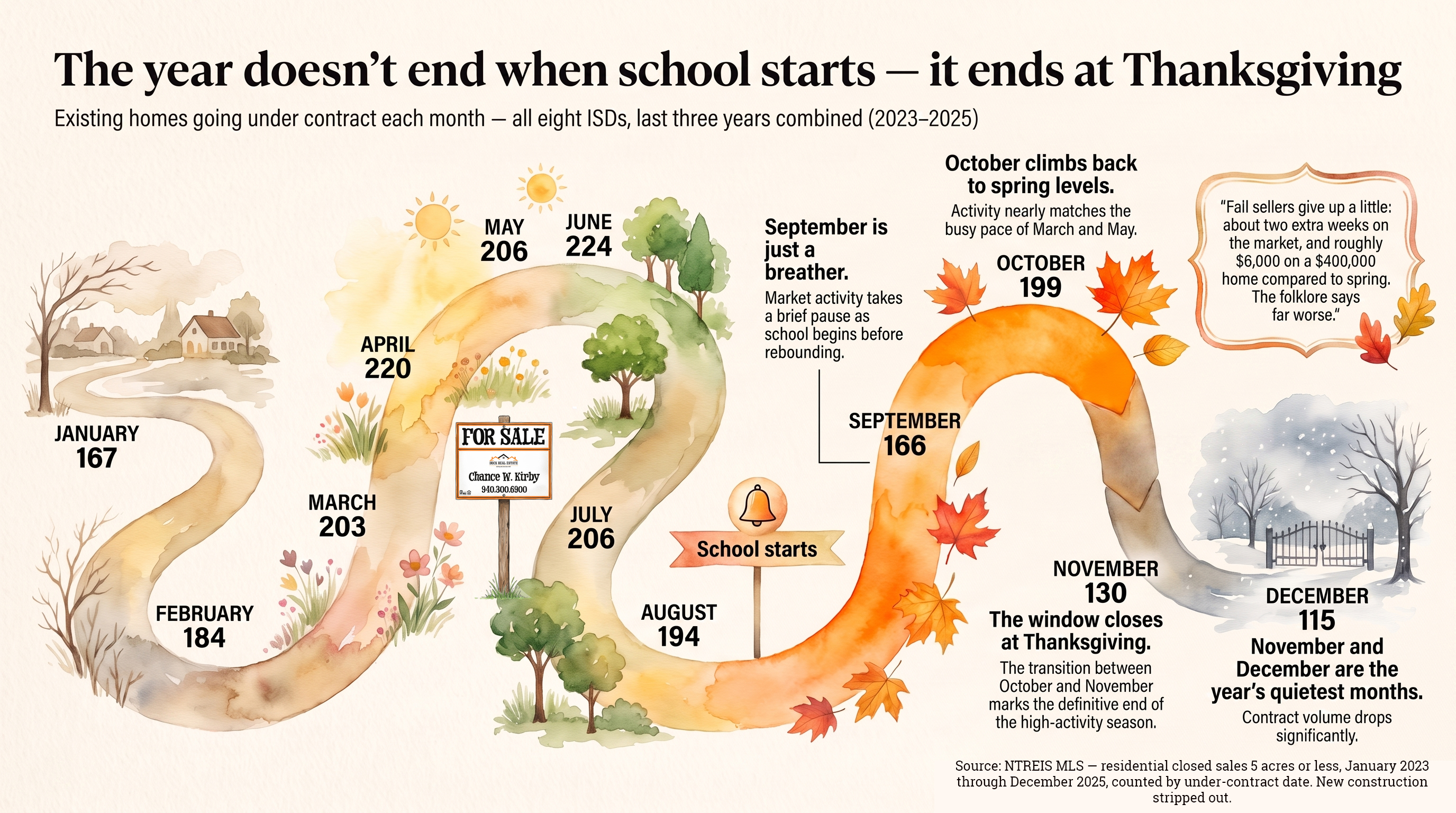
This week's chart follows the year like a winding country road, January through December. The number beside each month is how many existing homes went under contract that month across our eight ISDs — the last three years combined, 2023 through 2025. Two things about how I counted. First, I'm counting from the day a home went under contract, not the day it closed. Closings run about a month behind the handshake, so if you want to know when buyers actually show up, you count contracts. And second, as always, new construction is stripped out. This is the resale market — your market.
Here's what I want you to see. September takes a breather while everyone settles into the school year. Then look at October — the road turns bright orange and climbs right back up, standing shoulder to shoulder with May and March. The market doesn't die when the school bell rings. It catches its breath for a few weeks and comes right back.
So when does the year actually end? Thanksgiving. November and December are the two quietest months on the chart, by a wide margin — quieter than the dead of winter in January and February. The real selling window runs through the end of October, not the end of July.
Now the honest part, because there is one. Fall sellers do give up a little something. Over these three years, a home that went under contract in the spring took about a month to find its buyer; a fall contract took about two weeks longer. And on price, spring sellers kept about 96.7% of their original asking price, while fall sellers kept about 95.2%. Let me put that in dollars so it's not just percentages floating around. Say you list at $400,000. At the spring number, you'd close around $387,000. At the fall number, around $381,000. That's roughly a $6,000 difference — real money, but a long way from the folklore that says selling after Labor Day means giving the house away. And notice I'm measuring against the original asking price — the price the home first hit the market at, not the price after a cut or two. That's the honest yardstick, because it compares what sellers hoped for with what they actually got.
That's exactly why the right local knowledge matters right now. A national algorithm or a DFW-wide market report will tell you real estate slows down in the fall — it can't tell you that in our eight ISDs, October runs at spring pace and the real cliff doesn't arrive until Thanksgiving, or what those two facts should mean for your timing. Thirty-four years of selling homes in our area has taught me something the chart can't show: the buyers still out looking in October are the serious ones, and a home priced right for them doesn't sit. If you're thinking about selling this year — or you'd written off "this year" as already over — I'm here to help.
Chance Kirby - Irick Real Estate
940.300.6900
Want to know what this means for your home? Call or text Chance Kirby at (940) 300-6900 for a free price opinion based on recent sales near you.