Where a New Home Now Costs Less Than a Used One

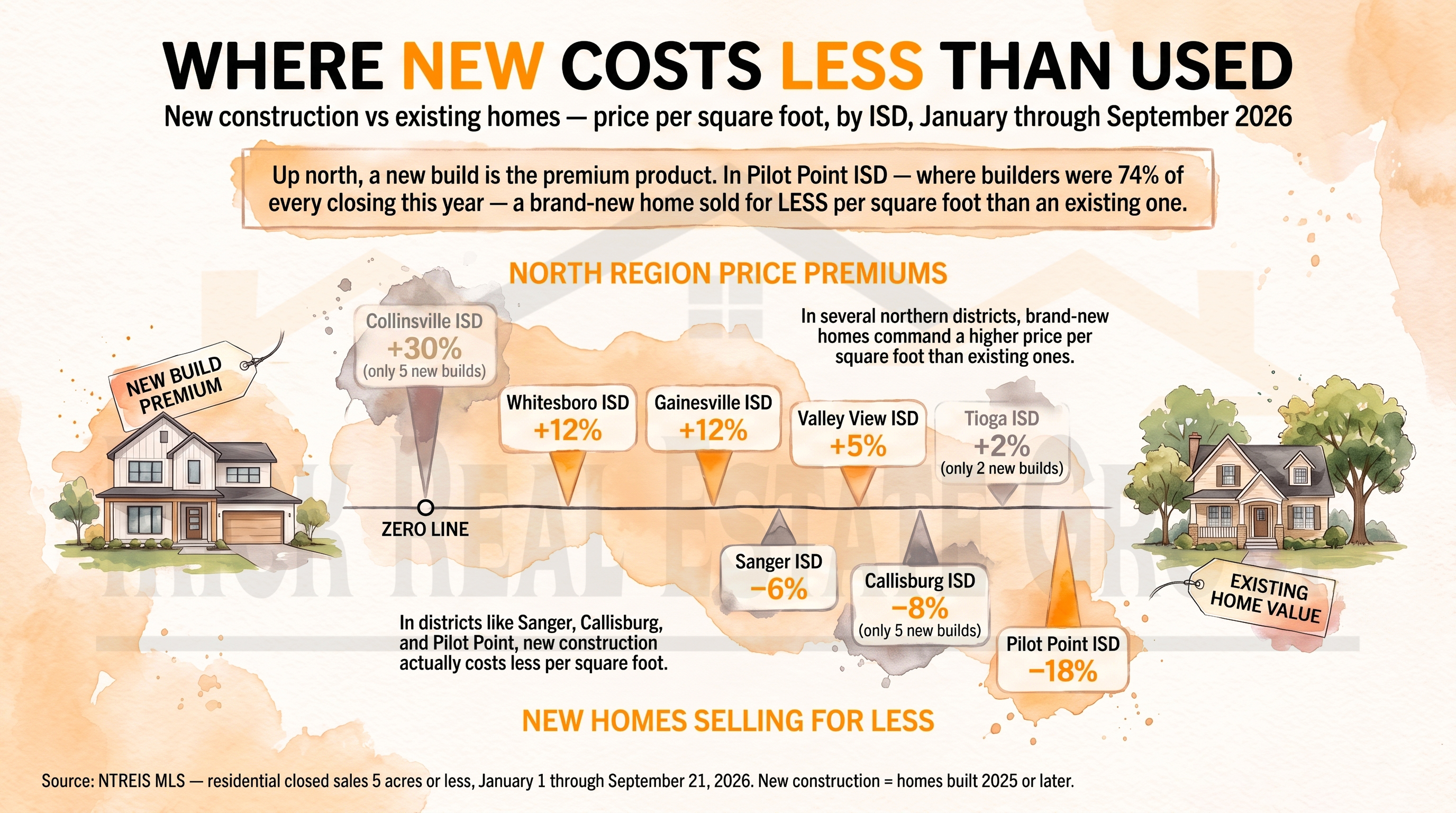
In the southern half of our area, a new home now costs less than a used one.
The summer series ended last week with an honest number: values slipped about 4 cents on the dollar. This week I went looking for the biggest force behind that — and measured it. The question: when a builder and a homeowner sell in the same district, who gets more per square foot? I took every closing in our eight districts this year — 968 of them since January 1, about four in ten from builders — and compared what buyers paid per square foot for new construction against existing homes, district by district.
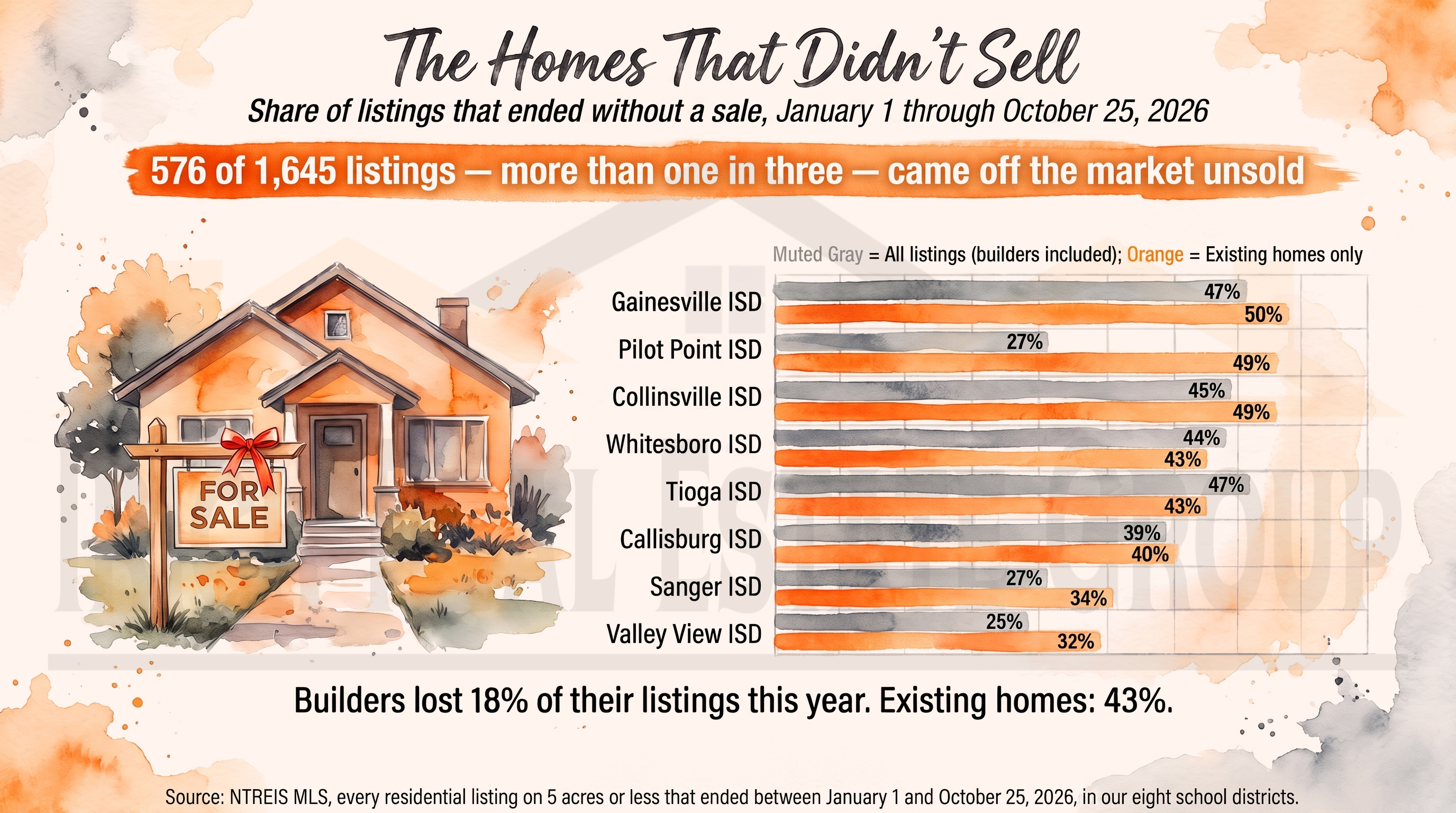
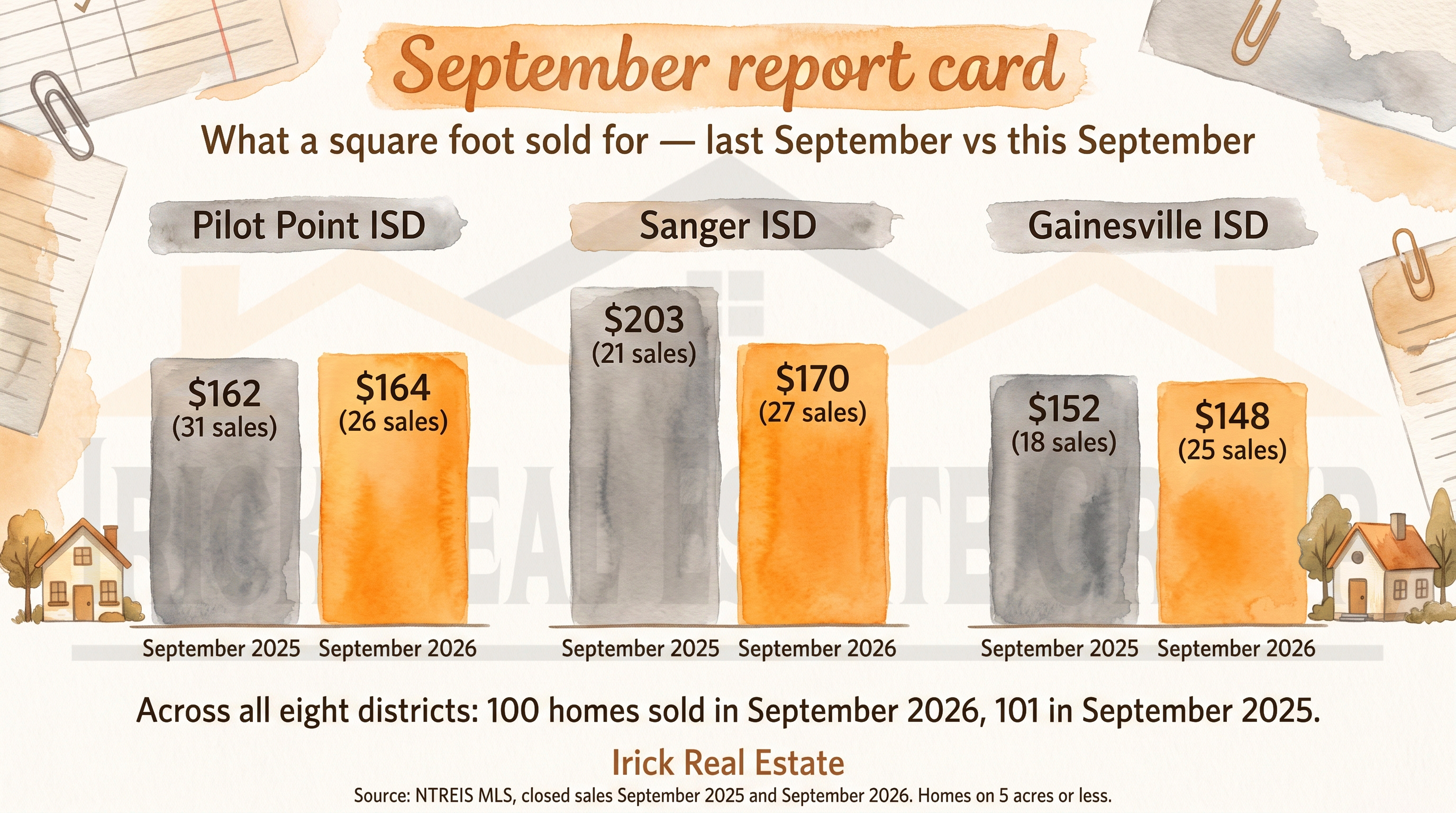
The northern half of our area works the way you'd assume. In Whitesboro ISD and Gainesville ISD, a new build sells for about 12% more per square foot than an existing home — new construction up there is the premium product, mostly custom homes. Drive south and the sign flips. In Sanger ISD, builders sold new homes within a few cents per foot of what existing homes brought — a brand-new house at a used-house price, before you even count the rate buydowns builders throw in. And in Pilot Point ISD, where builders accounted for 74 of every 100 closings this year, a new home sold for about 18% less per square foot than an existing one. Read that again the way a buyer reads it: in Pilot Point, new costs less than used. That is the negotiating table every existing-home seller there sits down at.
Inside the builder communities themselves, it's a different weather system entirely. Across our whole area this year, only ten families have resold nearly-new homes inside subdivisions where the builder is still actively closing — and their results tell the story: about $152 a square foot against $180 everywhere else, a little less of the asking price kept, and a typical wait of 138 days to go under contract against 59 outside. In one large builder community in Sanger ISD, the builder closed 23 new homes this year while two families trying to resell waited the better part of half a year. Ten sales is a handful, and I print it as a handful — but every one of them points the same direction.
And if you're reading this from the north half of the map thinking it's a southern problem: it's already landed. In one builder community in Gainesville ISD, the builder closed 21 new homes this year, and the two owners who resold there took about 11% less per square foot than the new homes around them — after more than 200 days on the market. One honesty note cuts the other way, too: Callisburg ISD has almost no builders — about 6% of its closings — and its values still slipped this summer. So builders aren't the only weather in this market. But where they build at volume, they set the rules.
So what do you do with this? If you own in or near a builder community and you're thinking about selling: you cannot out-incentive a builder, so don't try to out-sticker one either. Your home has things the builder can't print — established trees, a finished yard, blinds and gutters and a garage-door opener that already work, and no eight-month wait. Sell those, and price against what the builder's homes actually net after incentives, not their sign out front. If you're holding a nearly-new home in an active builder community and you don't have to sell yet, the strongest move may be patience. And if you're up north: the southern half of this chart is your preview. Thirty-four years here has taught me which subdivisions this squeeze hits hardest street by street — if you're weighing a sale anywhere near new construction, let's read your street's version of this chart together. I'm here to help.
Chance Kirby - Irick Real Estate
940.300.6900
Want to know what this means for your home? Call or text Chance Kirby at (940) 300-6900 for a free price opinion based on recent sales near you.